When it comes to luxury watches, nothing beats the authenticity of it all. This is because when buying, selling or collecting such brands as Rolex, Patek Philippe and Audemars Piguet, it’s important to have a clear understanding of the differences between factory and independent watch authentication. Both are designed for determining whether your timepiece is real, although the means through which this is accomplished differs greatly from one to another.
What is Factory Certification?
Factory certification refers to the official documentation issued by the watch manufacturer at the time of purchase. It is often called:
- Warranty Card
- Certificate of Origin
- Manufacturer Papers
Step-by-Step Factory Certification Process
- Production & Assembly
The watch is manufactured and assembled under strict brand-controlled conditions. - Quality Control Inspection
The brand performs internal checks to ensure accuracy, finishing, and durability. - Serial Number Registration
Each watch is assigned a unique serial number stored in the brand’s internal database. - Issuance of Certificate
A warranty card or certificate is issued, stamped, and dated by an authorized dealer. - Authorized Distribution
The watch is sold through official boutiques or authorized retailers.
Key Characteristics
- Issued only once at the time of sale
- Confirms original purchase authenticity, not current condition
- Can be lost, forged, or mismatched over time
- Limited accessibility (requires brand or authorized dealer involvement)
What is Independent Authentication?
Independent authentication is a third-party verification process conducted by professional labs like TP Labs. It is especially critical in the pre-owned and secondary watch market.
Step-by-Step Independent Authentication Process
- Initial Identification
Verifying brand, model, reference number, and visible features. - External Inspection
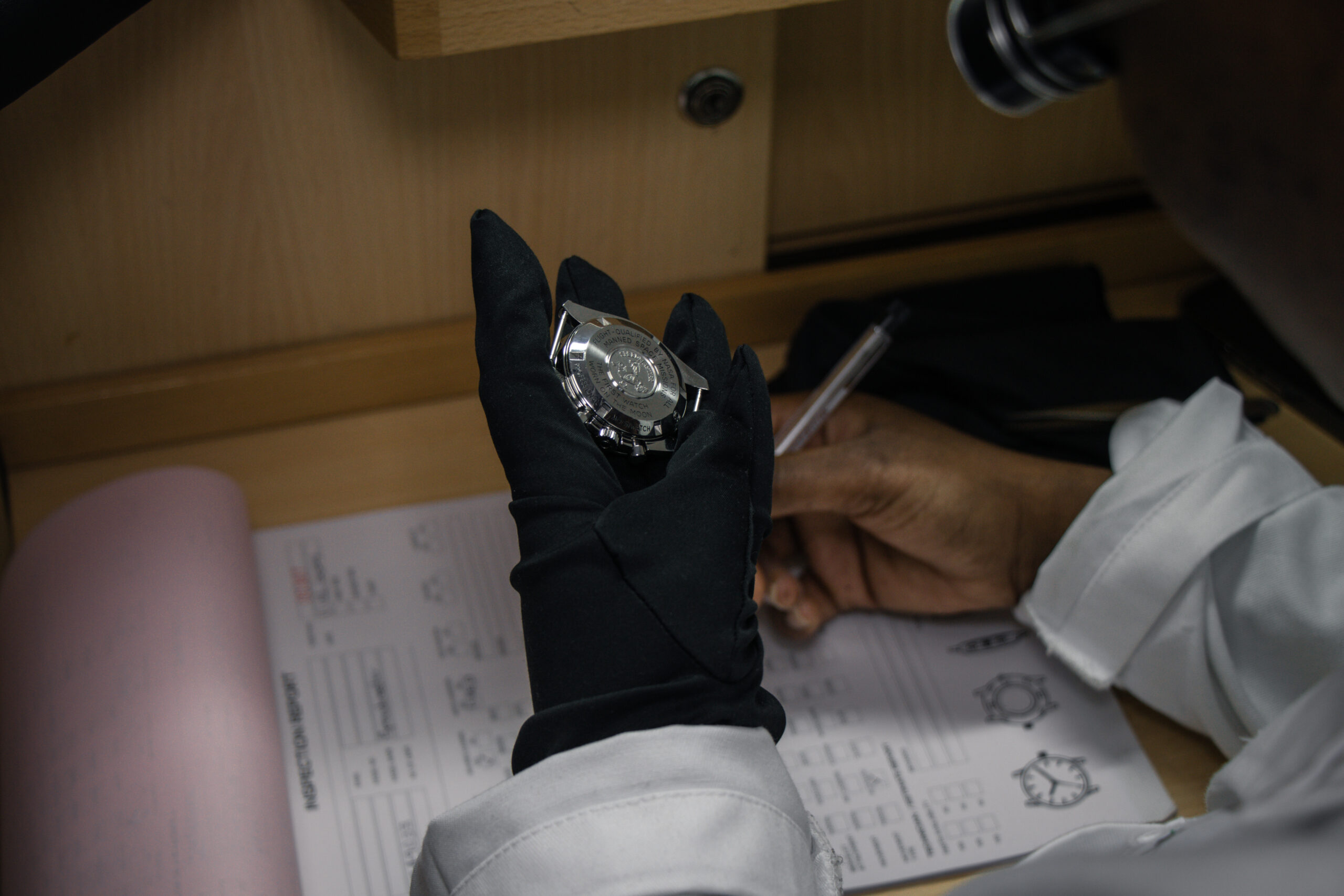
Checking case, dial, hands, engravings, and finishing consistency. - Movement Examination
Opening the caseback to inspect the internal movement, caliber, and serial alignment. - Component Verification
Ensuring all parts (bracelet, crown, crystal, etc.) are original and period-correct. - Performance Testing
Using tools like a timegrapher to check accuracy, amplitude, and beat error. - Database & Historical Cross-Check
Matching serial numbers and specifications with known manufacturer data. - Final Authentication Report
Issuing a detailed report confirming authenticity, condition, and originality.
Key Characteristics
- Can be done anytime (new or pre-owned watches)
- Provides current, real-time verification
- Detects counterfeits, replaced parts, and modifications
- Highly valuable in resale and collector markets
TP Labs Authentication Process (Professional Standard)
At TP Labs, authentication is handled through a methodical, watch-by-watch approach designed for precision and transparency.
TP Labs Step-by-Step Approach
- Watch Intake & Documentation
Every watch is logged with initial details, images, and client requirements. - Visual & Structural Analysis
Experts examine the case, dial, engravings, and finishing under magnification. - Movement Authentication
The internal movement is inspected for correct caliber, finishing, and serial alignment. - Component Consistency Check
Each part is verified to ensure it matches the original factory specifications. - Technical Performance Testing
Accuracy, power reserve, and mechanical health are tested using advanced equipment. - Cross-Verification
Details are matched against known manufacturer standards and historical data. - Final Certification Report
A comprehensive report is issued, covering:
- Authenticity status
- Condition assessment
- Originality of parts
- Performance results
This structured process ensures buyers, sellers, and collectors receive reliable and unbiased verification.
Factory Certification vs Independent Authentication
| Factor | Factory Certification | Independent Authentication |
| Issued By | Brand / Authorized Dealer | Third-Party Experts (e.g., TP Labs) |
| Timing | At original purchase | Anytime (before/after purchase) |
| Purpose | Proof of origin | Proof of current authenticity |
| Reliability Over Time | Can become outdated | Always current and relevant |
| Detects Modifications | ❌ No | ✅ Yes |
| Accessibility | Limited | Easily accessible |
| Use in Resale Market | Helpful but not sufficient | Essential |
Why Authentication is Important
In today’s market, where counterfeit watches are increasingly sophisticated, authentication is no longer optional—it’s critical.
- Protects Buyers: Ensures you’re investing in a genuine timepiece, not a replica.
- Secures Seller Credibility: Authenticated watches sell faster and at higher value.
- Detects Hidden Issues: Reveals replaced parts, refinished dials, or incorrect components.
- Builds Trust in the Market: Independent verification creates transparency in transactions.
- Essential for High-Value Brands: Luxury brands like Rolex and Patek Philippe are frequent targets for counterfeiting, making authentication crucial.
Final Thoughts
Certification from the factory is good, but it does not tell the whole story. It verifies how old the watch is, but does not indicate its current status. Authenticating your watch with independent sources, such as TP Labs, ensures that you have all the facts about your watch.
For those who value luxury timepieces in collecting, purchasing, or selling, authenticating your timepiece is essential.