
Whether you’re caught in unexpected rain, relaxing by the pool, or diving hundreds of meters beneath the ocean’s surface, one engineering feature stands between your luxury watch and permanent damage –water resistance.
Today, water resistant watches are among the most desirable timepieces in the world. From Rolex and Omega to Tudor, Seiko, and Blancpain, manufacturers invest millions in developing cases capable of keeping moisture away from delicate mechanical movements.
But what actually makes a watch water resistant?
Is it simply thicker glass? Better steel? A screw-down crown?
The answer is far more fascinating.
In this guide, we’ll explore the science behind water resistant watches, why they matter, who benefits from them the most, and why moisture testing has become an essential part of luxury watch ownership. We’ll also explain how TP Labs performs professional inspections to ensure every authenticated watch is free from hidden moisture before reaching its next owner.
Water Resistant Doesn’t Mean Waterproof
One of the biggest misconceptions among watch buyers is believing a watch is “waterproof.”
In reality, virtually every luxury watch manufacturer now uses the term water resistant, because no watch remains permanently immune to water under every condition.
Water resistance depends on several factors:
- Age of the seals
- Crown position
- Impact damage
- Temperature changes
- Previous servicing
- Case integrity
Even a watch originally rated to 300 meters can lose much of its resistance if its gaskets have deteriorated or if the crown has suffered unnoticed damage.
This is why experts consistently recommend periodic pressure testing rather than assuming a watch remains protected forever. That advice is echoed throughout watch communities, where experienced collectors frequently recommend testing before exposing any watch—especially vintage pieces—to water.
The Technology That Keeps Water Out
A luxury watch may look simple from the outside, but its water resistance comes from multiple engineered components working together.
1. Precision Case Construction
The case forms the first protective barrier.
Manufacturers machine stainless steel, titanium, gold, or ceramic cases with microscopic tolerances so every component fits perfectly.
Even gaps measured in fractions of a millimeter can allow moisture to enter.
2. Rubber Gaskets and O-Rings
The true heroes of water resistance are tiny synthetic rubber seals known as gaskets.
You’ll find them around:
- The crown
- Crystal
- Case back
- Pushers on chronographs
- Helium escape valves (on professional dive watches)
These seals compress under pressure, preventing water from entering the case.
However, rubber naturally ages.
Heat, UV exposure, chemicals, sweat, and time gradually harden the material, reducing its sealing ability.
That’s why replacing gaskets is a critical part of a professional watch service.
3. Screw-Down Crowns
The crown is the most vulnerable opening on any watch.
Luxury dive watches use screw-down crowns that thread securely into the case, compressing multiple gaskets simultaneously.
Without properly tightening the crown, even the highest-rated dive watch can become vulnerable to water intrusion.
4. Sapphire Crystal Engineering
Modern luxury watches typically use synthetic sapphire crystals.
Besides exceptional scratch resistance, these crystals are press-fitted or gasket-mounted with remarkable precision.
Any microscopic imperfection during installation could compromise water resistance.
5. Screw-Down Casebacks
Instead of simple snap-on backs, professional dive watches often feature threaded casebacks.
This design evenly compresses the gasket while creating consistent sealing pressure around the entire case.
How Do Manufacturers Test Water Resistance?
Testing isn’t simply placing a watch in water.
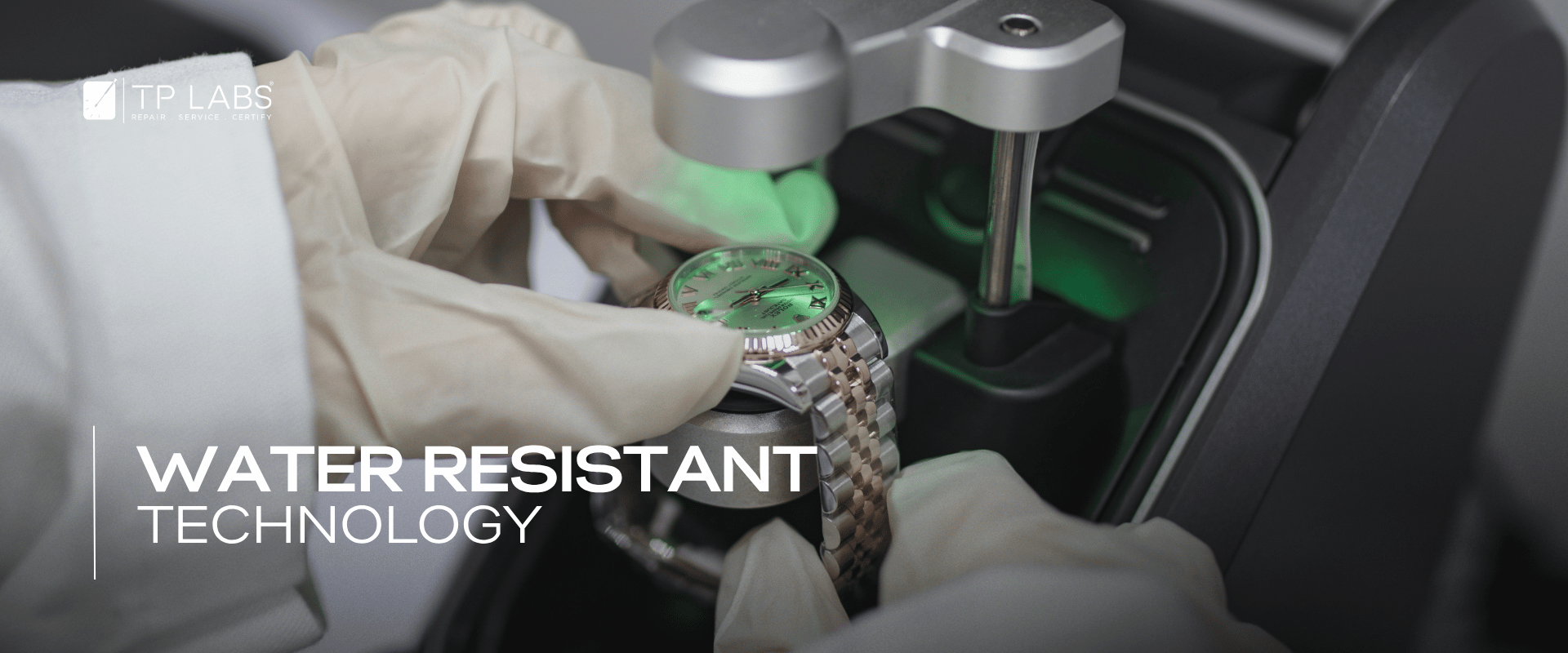
Professional manufacturers use sophisticated pressure chambers.
Common testing methods include:
Dry Pressure Testing
The watch is placed inside a sealed chamber where air pressure changes.
Special sensors measure microscopic case deformation.
If the case expands or contracts incorrectly, technicians know a leak exists—without exposing the movement to water.
Wet Pressure Testing
After passing dry testing, some watches undergo wet pressure testing.
The watch is subjected to controlled pressure before being examined for escaping air bubbles or internal condensation.
This method confirms whether seals remain completely intact.
Many professional service centers combine vacuum, pressure, heat, and cooling tests to identify even tiny amounts of internal moisture.
Why Moisture Is So Dangerous
Many collectors assume a tiny amount of moisture isn’t a problem.
In reality, moisture is one of the biggest enemies of any mechanical movement.
Even minimal condensation can lead to:
- Rust forming on steel components
- Lubricating oils breaking down
- Reduced accuracy
- Dial staining
- Corrosion on hands
- Damage to the movement
- Expensive repairs
Unlike scratches, moisture damage often begins invisibly.
By the time condensation appears beneath the crystal, internal corrosion may already have started.
Who Benefits Most from Water Resistant Watches?
Although divers inspired many modern water resistant watches, today’s owners come from every lifestyle.
Professional Divers
Dive watches remain essential backup instruments, even in the age of dive computers.
Travelers
Changing climates, humidity, beaches, and sudden rainstorms all increase exposure to moisture.
Athletes
Swimmers, sailors, surfers, paddleboarders, and water sports enthusiasts rely heavily on dependable water resistance.
Everyday Collectors
Even daily activities such as washing hands, cleaning, gardening, or unexpected weather expose watches to water.
This is why many collectors now prefer watches offering at least 100 meters of water resistance.
The Historic Moment That Changed Everything
One event transformed public confidence in water resistant watches forever.
In 1927, English swimmer Mercedes Gleitze wore a Rolex Oyster during her attempt to swim the English Channel.
After more than ten hours in cold salt water, the watch continued running perfectly.
The achievement became one of the most influential demonstrations in watchmaking history and helped establish consumer trust in sealed wristwatches. It also marked the beginning of the modern era of water resistant watch engineering.
Decades later, brands continued pushing boundaries by developing watches capable of surviving the immense pressures of the Mariana Trench and other extreme underwater environments.
What Watch Enthusiasts Say
Among experienced collectors, one recommendation appears repeatedly:
Never assume a watch is water resistant simply because the dial says so.
Reddit discussions among enthusiasts consistently emphasize having a watch pressure-tested after purchase—particularly if it is pre-owned, vintage, or has recently been opened for repairs. Many owners are comfortable with everyday splashes but recommend professional testing before swimming or diving.
That practical advice reflects a broader truth: water resistance is something that should be verified, not taken for granted.
Why Moisture Testing Is Essential at TP Labs
At TP Labs, authentication goes far beyond verifying serial numbers or confirming originality.
Every luxury watch undergoes a detailed inspection because authenticity alone doesn’t guarantee reliability.
Our specialists carefully examine:
Complete External Inspection
The case, crown, pushers, crystal, bracelet, clasp, and seals are checked for signs of damage or previous repairs.
Moisture Detection
Using professional testing techniques, our experts inspect the watch for hidden moisture or condensation that could compromise movement performance.
Even microscopic moisture trapped inside the case can gradually damage internal components, making this one of the most important stages of evaluation.
Water Resistance Assessment
Where appropriate, pressure testing helps verify that the watch’s seals continue to perform as intended, ensuring confidence for everyday wear.
Movement Evaluation
The movement is assessed for accuracy, wear, lubrication, and overall health before the watch is approved.
Authentication Alone Isn’t Enough
Many buyers focus exclusively on watch authentication, but true confidence comes from understanding the watch’s overall condition.
A genuine watch with hidden moisture, worn seals, or neglected maintenance may require significant repairs shortly after purchase.
That is why professional inspection should also include:
- Water resistance evaluation
- Moisture testing
- Mechanical assessment
- Cosmetic inspection
- Timing analysis
When combined, these checks ensure both authenticity and long-term reliability.
Watch Service and Watch Polishing Complete the Experience
Luxury watches deserve ongoing care long after purchase.
Routine watch service replaces aging gaskets, renews lubrication, restores movement performance, and maintains water resistance.
Meanwhile, professional watch polishing helps revive the watch’s appearance by carefully removing superficial wear while preserving the original lines and finishing. When performed by skilled specialists using manufacturer-approved techniques, polishing can enhance the watch’s visual appeal without compromising its character.
Together with thorough authentication and moisture testing, these services help preserve both the functionality and charm that make luxury watches so desirable.
Final Thoughts
Water resistant watches represent one of the greatest achievements in modern horology. Behind every secure crown, precisely machined case, and carefully engineered gasket lies decades of innovation designed to protect a movement that may contain hundreds of finely crafted components.
Yet even the best engineering requires regular care. Seals age, gaskets compress, and unnoticed moisture can slowly compromise a watch from the inside out.
That’s why professional inspection matters.
At TP Labs, every luxury watch is evaluated with the same attention to detail collectors expect from a premium service center. From watch authentication and moisture inspection to watch service recommendations and expert watch polishing, each stage helps ensure the watch is not only genuine but also mechanically sound, visually refined, and ready to be confidently worn on the wrist for years to come.